
Electrical Repairs in Houston
Fault-finding for outlets, breakers, lights and switches: what each symptom usually means and how it gets fixed.
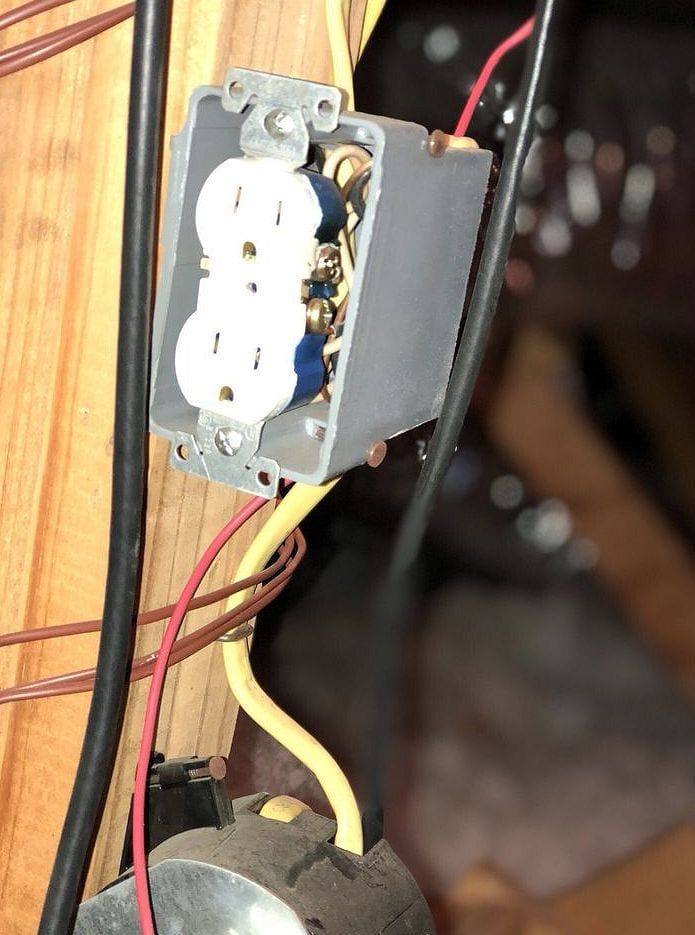
Most electrical repairs start with a symptom rather than a known cause. An outlet goes dead, a breaker will not stay on, the kitchen lights flicker when the microwave runs. The repair itself is often small. The work is in finding which connection, device or circuit is at fault, and checking that nothing else on that run has been damaged by heat.
Jimmy takes the troubleshooting calls in person and explains what he finds before any work begins, so you know whether a part needs a simple repair or a replacement.
Repairs We Handle Most
- Dead outlets and dead circuits
- Breakers that keep tripping
- Flickering or dimming lights
- Faulty or warm switches
- Burnt or loose receptacles
- Failed GFCI outlets
- Buzzing or humming fixtures
- Damaged or chewed wiring
Symptoms, Causes and the Usual Fix
A guide to what each problem tends to mean in a Houston house. The visit confirms the actual cause before anything is changed.
| Symptom | Common cause | Typical repair |
|---|---|---|
| Outlet has no power | A tripped GFCI upstream, a loose backstab connection, a worn receptacle | Reset or replace the GFCI, move wires to the screw terminals or replace the receptacle |
| Breaker trips again and again | Too much load on one circuit, a short, a ground fault or a worn breaker | Find the fault, split the load onto another circuit or replace the breaker |
| Lights flicker or dim | A loose bulb or fixture connection, a failing switch, a loose neutral | Tighten or remake the connections; a whole-house flicker gets the panel checked |
| Switch does nothing or feels warm | Worn contacts, a loose wire, a dimmer on the wrong kind of bulb | Replace the switch or fit a dimmer rated for the bulbs |
| Outlet face burnt or plugs fall out | Heat from a loose connection or worn contacts | Replace the receptacle and check the wire end and the box |
| Fixture buzzes or hums | A dimmer mismatch, a loose connection or a failing driver | Match the dimmer and bulbs, remake connections or replace the fixture |
| Dead circuit, nothing tripped | A broken connection somewhere along the run | Trace the circuit box by box to the break and repair it |
Older homes in neighborhoods such as the Heights and Montrose often add one more cause: original wiring and devices that have simply worn out. There, a repair can turn into a question of replacing a section of the circuit.
Repair It or Replace It?
Answer three questions about the part that is giving trouble. The result is a general guide, not a diagnosis.
A breaker that trips under normal load or will not reset is replaced, not repaired. Outlets and switches are cheap parts, so a worn one is usually swapped once the wiring behind it is checked.
When a Repair Can Wait, and When It Cannot
Can a flickering light wait a few days?
If one bulb flickers in one fixture, it is usually the bulb or the connection in that fixture, and it can wait for a regular visit. Turn the fixture off if it buzzes or smells warm.
If lights flicker in several rooms at once, or dim when a large appliance starts, call sooner: that can point to a loose connection at the panel or on the service line.
When is a repair urgent?
Call right away for sparks, a burning or hot plastic smell, an outlet or switch that is hot to the touch, scorch marks, or a breaker that trips instantly every time you reset it. Turn off the breaker for that circuit if you can do so safely.
For fire or a downed line, call 911 first. The urgent service page lists the warning signs and safe first steps.
Is it safe to keep resetting a breaker?
Resetting once after an obvious overload, such as a space heater and a hair dryer on one circuit, is normal. A breaker that trips again with the same load, or right away, is telling you there is a fault. Leave it off and call.
Why did the outlets in one bathroom stop working?
Bathroom, kitchen, garage and outdoor outlets are often protected by a single GFCI outlet, sometimes in another room. Look for a GFCI with a tripped reset button before assuming the outlets have failed.
Ready to have it looked at? Request an estimate, or call (832) 979-0435 and describe what is happening.